
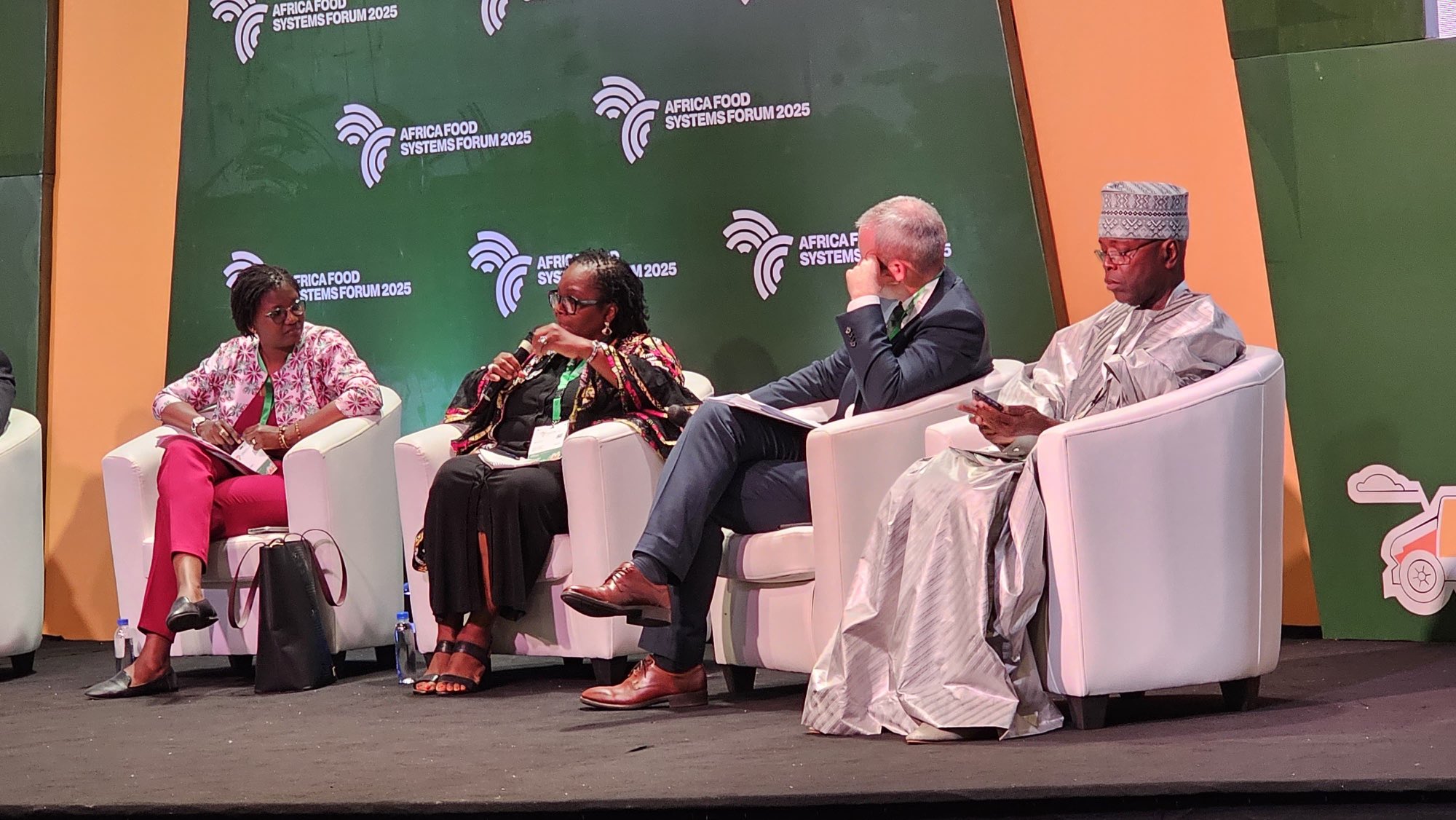
At the Africa Food Systems Forum (AFSF) 2025 in Dakar, Mdm. Juliet Laverley, a director at Ma Nyande Women’s Development Organization (MNWDO), took the stage as a panelist to share transformative insights on women’s and youth’s roles in agriculture. Speaking on the panel, “Women & Youth Driving Agricultural Transformation Leveraging Green Economy through Inclusive Policies & Financing,” Mdm. Laverley highlighted how regenerative agriculture and agro-waste reuse can significantly reduce greenhouse gas emissions, a critical step toward sustainable food systems in Sierra Leone and beyond.
The food industry generates approximately 1.4 billion tons of greenhouse gases annually, contributing heavily to climate change. Mdm. Laverley emphasized the need to transform food production by adopting regenerative practices that restore soil health and enhance crop resilience. She showcased MNWDO’s efforts in training women farmers to reuse agro-waste, such as crop residues, for animal feed, reducing environmental impact while creating economic opportunities. “By switching to clean cooking methods and reusing agro-waste, women are at the forefront of slashing emissions and building a greener future,” she noted.
A key innovation highlighted was the adoption of waste-to-wealth solutions, such as black soldier fly (BSF) farming. This approach not only produces high-quality animal feed but also reduces landfill waste and generates rich organic fertilizer as a byproduct. These initiatives create green jobs for women and youth, aligning with MNWDO’s mission to empower rural communities in Bo and Falaba Districts. By integrating these practices, MNWDO is fostering sustainable livelihoods and contributing to Sierra Leone’s Feed Salone initiative.
The panel also addressed financial barriers to accessing climate-smart agriculture technologies. Mdm. Laverley advocated for inclusive policies and financing mechanisms to ensure women farmers can adopt innovations like BSF farming and gender-friendly tools, such as power tillers. Drawing inspiration from successful models like Gambia Green Hubs, she emphasized strategies to improve women’s access to climate financing, enabling them to gain credit for their contributions to climate action. These efforts are critical to scaling sustainable agriculture and ensuring women’s leadership in the green economy.
Mdm. Laverley’s participation at AFSF 2025 underscores MNWDO’s commitment to driving agricultural transformation through women’s empowerment. By advocating for regenerative practices, waste-to-wealth innovations, and equitable financing, MNWDO is paving the way for a sustainable, inclusive future in Sierra Leone’s agriculture sector. Learn more about our work at mnwdo.com and join us in building a greener tomorrow.
 2 Comments
 2 Comments
 2 Comments

Leave a Comments